Endophyte 2.0
Answer: Yes! But in a different way than Gamboa et al (2002). The population density of culturable fungi in our (temperate) Magnolia seems to be much lower than those found in tropical species. Consistently, a substantial number of leaf pieces have no fungi emerging from them. This might allow us to have a simple quantifiable number for a long-term project (even as we try to identify particular species).
Also, circumference rather than area seems to be the best way to normalize the data. That is, it seems that fungi need to be “near an edge” to “escape” from the tissue into the culture medium.
Finally, there was a technical problem with the smallest pieces we looked at.
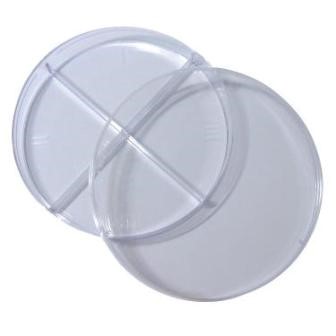
In Endophyte 1.0, we found that cutting by hand was laborious, inconsistent in size, and difficult to generate smaller pieces. We briefly tried an herb chopper (Zyliss FastCut Herb Mincer) with parallel blades, but this was unwieldy. We were also concerned about culturing many tissue pieces on one plate: fast-growing fungi may inhibit or obscure slower ones. To address this, we have begun using “quad plates”.
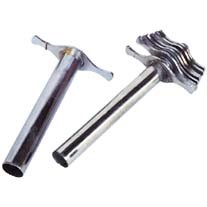
One of us (AQ) reminded the lab of the original tobacco leaf disk transformation protocol that used cork borers to generate the disks. These generate very consistent pieces of tissue and allow us to repeat a “Does size matter?” experiment with Magnolia grandiflora.
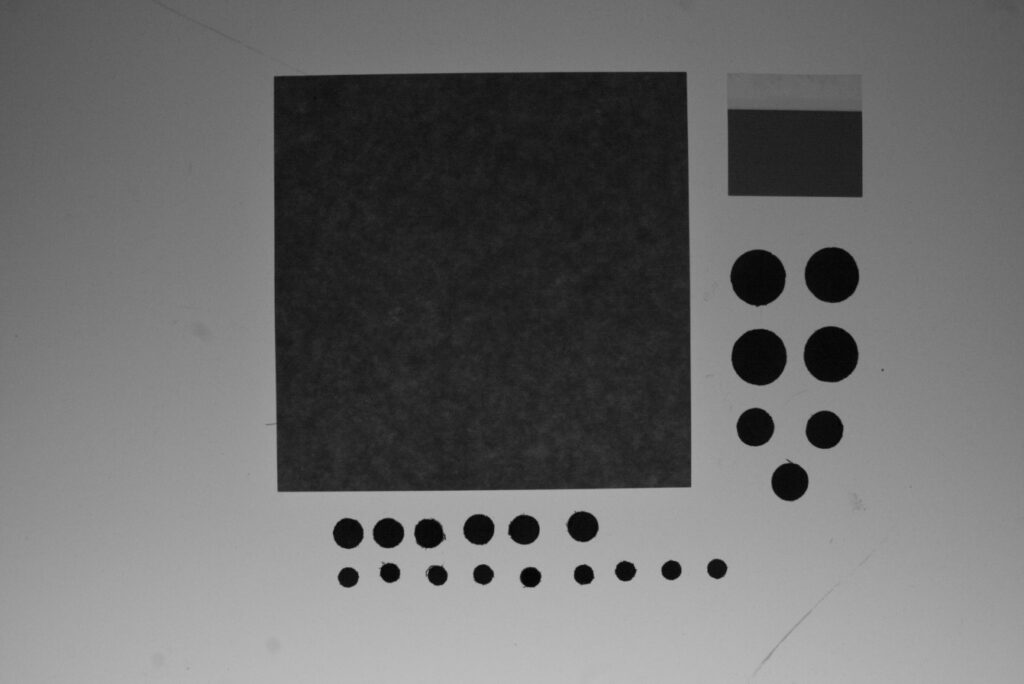
A free program named ImageJ can be used to calculate surface area of objects in a digital image, by comparison to a known size standard (like a post-it note). A nice protocol can be found here by Glozer (Protocol for Leaf Image Analysis – Surface Area). We are using this program to measure leaf surface area as part of our demographic data.
http://ucanr.edu/sites/fruittree/files/49325.pdf
Table: Calculating actual size of leaf disks
Figure was used to calculate the “actual” area, radius, and circumference of the leaf disks.
| Borer radius | Average area calculated by ImageJ | Derived radius | Calculated circumference |
| 5 mm | 77.16 mm2 | 4.95 mm | 31.10 mm |
| 3.5 | 35.45 | 3.35 | 21.05 |
| 2.5 | 23.27 | 2.72 | 17.09 |
| 2 | 10.10 | 1.79 | 11.25 |
Endophyte 2.0 (RB, AF, LB, MT, TL, BB, AQ, NK)
Cork borers were used to generate Magnolia alpha leaf disks of four different sizes. These pieces were surface-sterilized and plated on appropriate media by the usual protocol. After ~ 1 week of growth, plates were scored for positive/negative disks, total number of fungi, and morphtype descriptions.
Results:
Data look good at first glance: decreasing size led to consistent decrease in positive disks (91 to 72 to 50 to 10%). If the population density is low, we might expect to reach a point at which there is <1 culturable fungi per disk.
Table: Does size matter experiment. NB: Table continues on next page.
Scored positive (+) and negative disks (-) [regardless number of fungi in positive
Scored total number of fungi (T)
These data were normalized in two ways: for the total area of the disks — looking essentially at population density– OR for total circumference — looking at essentially those fungi close enough to the “edge” to make it out of the tissue. So we can report “fungi per unit area” or “fungi per unit circumference.” Normalization by circumference gave the most consistent results, but the 2 mm data look bad.
Does size matter? Normalization by area and circumference
| 5.0 mm | 3.5 mm | 2.5 mm | 2.0 mm | |
| % positive disks | 0.91 | 0.72 | 0.50 | 0.10 |
| Total disks each size | 53 | 104 | 201 | 325 |
| Area one disk | 78.5 | 38.48 | 19.6 | 12.6 |
| Total area of all disks | 31.4 | 22 | 15.7 | 12.6 |
| Circumference one disk | 4161 | 4002 | 4161 | 4095 |
| Total circumference of all disks | 1664 | 2288 | 3156 | 4095 |
| Positive disks per unit area | 0.012 | 0.01 | 0.024 | 0.008 |
| Positive disks per unit Circumference | 0.029 | 0.033 | 0.032 | 0.008 |
| Fungi per disk | 1.038 | 0.855 | 0.567 | 0.120 |
| Fungi per unit area | 0.013 | 0.023 | 0.027 | 0.010 |
| Fungi per unit circumference | 0.033 | 0.040 | 0.036 | 0.010 |
Does size matter, standard protocol.
Positive disks and total fungi per unit area or circumference.
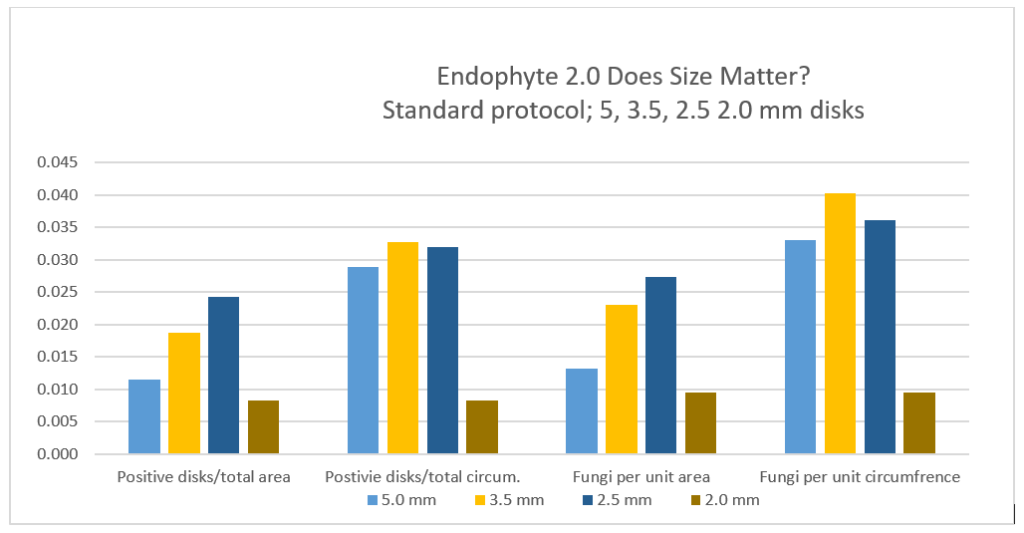
So the data look good except for the 2 mm data. Is this related to the small size of the tissue? We were concerned that the sterilizing solutions penetrate too far into the tissue and kill endophytes. Or perhaps the sterilizing times too long for smaller pieces? Did we inadequately dry the pieces before they are put on plates? We attempted to address this in Endophyte 3.0.
